
Manufacturing leaders are navigating a perfect storm: persistent labor shortages, volatile supply chains, margin pressure, and rapid shifts in customer demand. The upside? A wave of maturing technologies, ERP, MES/MOM, Industry 4.0, and AI, is finally converging in ways that can create real, near-term value on the shop floor.
After advising manufacturers across sectors and going behind the scenes at the Champions of Manufacturing conference in Dallas, here’s a clear-eyed view of what’s changing, what actually works, and how to move from hype to results.
1) The Skilled-Labor Gap Is Reshaping Tech Choices
The reality: Over 500,000 skilled manufacturing roles remain unfilled, while a large portion of the workforce nears retirement. Retraining churn is expensive; tribal knowledge is walking out the door.
What works:
- Connected workforce platforms that bring real-time work instructions, quality checks, maintenance prompts, and escalation paths to operators’ handhelds. These tools shorten time-to-competency and reduce onboarding costs.
- Persona-based UX in ERP/MES so buyer planners, schedulers, and line leads can get to the “next best action” without clicking through ten legacy screens.
- Embedded micro-learning at the point of work (short videos, checklists, and prompts triggered by context), not classroom training weeks after the fact.
Bottom line: Don’t aim to “replace” labor with tech, use tech to amplify people. If the new system makes it easier for the front line to win, adoption follows.
2) Onshoring and Supply Volatility Demand Radical Visibility
Tariffs, logistics swings, and EV market uncertainty make cost structures fluid. Manufacturers can’t fix what they can’t see.
What works:
- Model-based planning that ties bill of materials, routings, and supplier lead times to live cost drivers so you can simulate scenarios (alternate materials, dual sources, shift changes) before committing.
- Plant-floor telemetry (machine data, quality signals, downtime codes) unified with ERP order data to spot yield, scrap, and bottlenecks in hours, not months.
- Exception-driven control towers that surface late orders, capacity constraints, and margin leakage with a single click (or prompt), not a weekly spreadsheet hunt.
Bottom line: Treat “visibility” as a core capability, not a dashboard project. If a decision still requires three meetings and two exports, you don’t have visibility yet.
3) AI Is Moving From Buzzword to “System of Action”
We’re shifting from systems of record (log, store, report) to systems of action (analyze, recommend, execute). The change is practical, not philosophical.
What works:
- Agentic AI that can propose material substitutions, rebalance capacity, or raise a PO draft, and route it through human approval. Start with narrow, high-value use cases (inventory optimization, schedule recovery, price updates).
- Promptable ERP/MES: Let planners and supervisors ask, “Can we ship order 11874 by Friday? What needs to change?” and get an answer that includes the steps to do it.
- Human-in-the-loop guardrails to prevent AI from acting on stale data or risky edge cases. Think “recommend + explain + action with approval.”
Bottom line: The win isn’t one more report; it’s fewer keystrokes between signal and action.
4) Platform Consolidation, But Keep It Interoperable
There’s real consolidation in manufacturing tech (ERP, WMS, APS, CMMS, QMS, connected workforce). Vendors are bundling; buyers want fewer moving parts.
What works:
- A platform with open edges: Standard APIs, events, and data models so you can plug in best-of-breed where it matters (vision inspection, advanced scheduling) without creating a spaghetti bowl.
- Phased modernization over big-bang rip-and-replace. Tackle processes with clear ROI (e.g., scheduling + labor optimization) before re-platforming finance.
- Data product thinking: Define canonical objects (orders, lots, machines, skills) once, then reuse everywhere.
Bottom line: Consolidate where it lowers TCO and boosts adoption, but protect your right to “bolt on” where specialization pays.
5) Faster Decisions at the Edge of the Plant
Margin is set in the moments when a supervisor chooses a line changeover, a buyer accepts an expedited, or maintenance delays a repair. Those decisions need better context.
What works:
- Real-time KPIs for doers (OEE, first-pass yield, changeover readiness, skill coverage) delivered to the person who can act, not just leadership.
- Constraint-aware recommendations: If labor is tight, the scheduler sees options that fit skill matrices and certifications, not just machine availability.
- Closed-loop actions tied to outcomes (e.g., “accepted expedite” automatically adjusts pick priorities, supplier ASN expectations, and labor rosters).
Bottom line: Put analytics where the action is and shorten the loop from detection → decision → execution.
Implementation Realities: Why Good Ideas Stall
Even strong toolsets fail without execution discipline. The consistent blockers we see:
- Limited customer capacity. Backfill the business. Without time from planners, supervisors, and maintenance, you’ll configure software to yesterday’s assumptions.
- Change management as a core work stream. Adoption isn’t “train the trainer.” It’s role redesign, new KPIs, communications, and leadership modeling.
- Vendor-run projects. You need an internal PMO (or independent QA) to prioritize scope, police assumptions, and phase delivery around business readiness, not partner run rates.
- No measurable outcomes. Tie every use case to an owner and a number (e.g., “reduce changeover loss by 20% in 90 days”); review weekly; adjust.
A Pragmatic 90-Day Playbook
Weeks 0–2: Focus & Baseline
- Pick 2–3 high-leverage use cases (e.g., schedule adherence, inventory turns, unplanned downtime).
- Baseline current performance and define target improvements.
Weeks 3–6: Instrument & Pilot
- Connect the minimum viable data (machines + ERP orders + labor).
- Launch a pilot cell/line with frontline co-design; embed micro-learning.
Weeks 7–10: Close the Loop
- Turn insights into actions (alerts, auto-generated tasks, pre-filled transactions).
- Implement human-in-the-loop approvals and auditability.
Weeks 11–13: Prove & Scale
- Verify outcome gains; publish a 1-page case for each use case.
- Expand to the next site/line; standardize the pattern (templates, roles, SOPs).
Executive Checklist
- We have a named owner and an ROI target for each use case.
- Frontline operators helped design the workflow and see value day one.
- Our architecture is interoperable (APIs/events) and phased.
- AI is explainable and gated by human approvals where risk warrants.
- PMO/QA is independent from software vendors and SIs.
Final Thought
You don’t need every Industry 4.0 buzzword to win. You need clearer visibility, faster decisions, and fewer steps between insight and action, delivered in a way your people actually use. Start small, measure relentlessly, and scale what works.
If you’re mapping your next move, or want a sanity check on your roadmap, our independent, tech-agnostic Manufacturing Digital Transformation Report distills the landscape, compares leading solutions, and outlines proven implementation patterns. Grab the free copy from our site and use it as your field guide for the next 12 months.
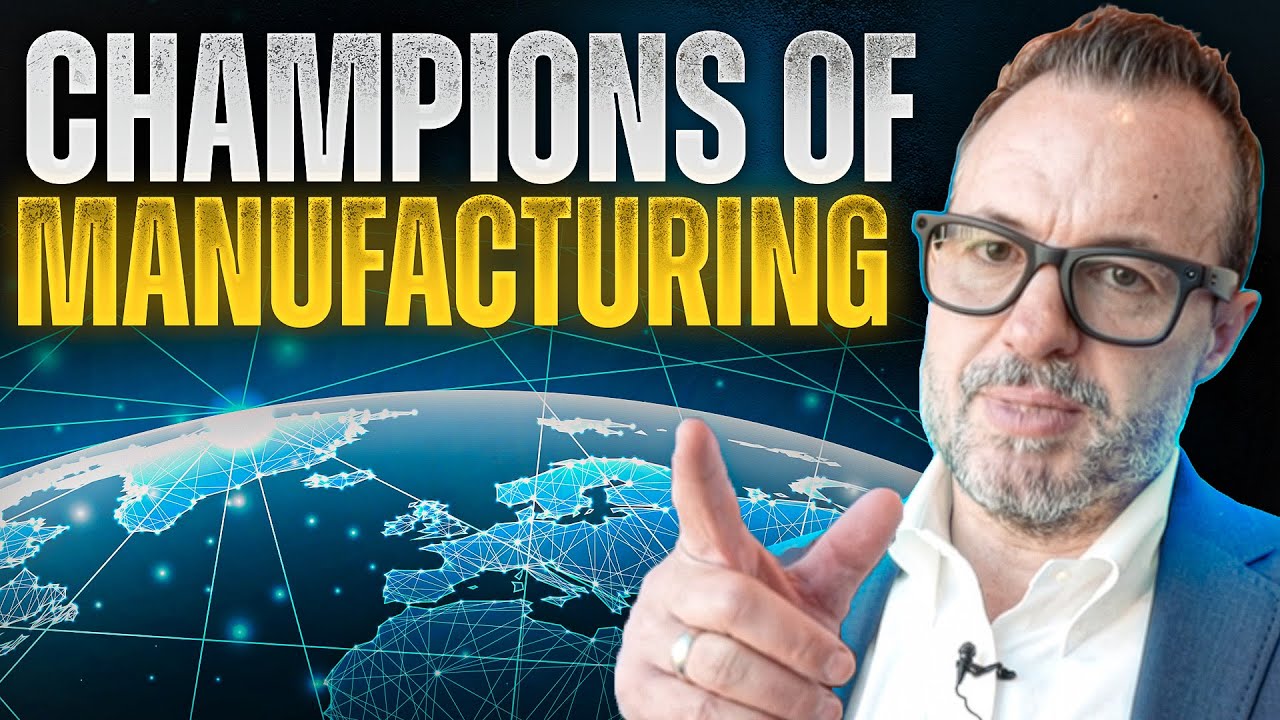

Eric is recognized globally as a leading voice in digital transformation and ERP strategy. Over the past two decades, he has helped hundreds of organizations – including Nucor Steel, Fisher & Paykel Healthcare, Kodak, Coors, Boeing, and Duke Energy – define their technology roadmaps, modernize complex operations, and deliver real business value from large-scale transformation initiatives.
As Founder and CEO of Third Stage Consulting, Eric leads an independent, technology-agnostic advisory firm focused on helping clients navigate the shift from traditional ERP to more flexible, AI-enabled Digital Enterprise Operations (DEO) models. His work spans ERP selection, implementation quality assurance, organizational change, and operating model design across a wide range of industries and geographies.
Eric is also a prolific thought leader, known for his pragmatic takes on AI, cloud, and enterprise software trends, as well as his firm’s benchmark research and frameworks for de-risking transformation. He is dedicated to helping executive teams cut through vendor hype, make confident investment decisions, and successfully reach the “third stage” of their digital evolution.


