
Lean Six Sigma became widely popular in the 1990s, but in today’s era of digital transformation, it has been overshadowed by the focus on technology, software platforms, and emerging capabilities like AI. That is a mistake. The principles behind Lean Six Sigma, reducing waste, increasing quality, and building a culture of continuous improvement, are exactly what most digital transformations are missing. In this post, we explain what Lean Six Sigma is, why it matters for your transformation, and how to apply it before, during, and after implementation.
What Is Lean Six Sigma?
Lean Six Sigma is a methodology focused on reducing defects, eliminating waste, and maximizing customer value within day-to-day operations. It combines two complementary approaches: Lean (focused on removing waste and improving flow) and Six Sigma (focused on reducing variation and defects through statistical analysis).
The methodology centers on value stream mapping, measuring results, and identifying root causes of operational problems. It originated in the Japanese auto industry in the 1980s and was brought into the mainstream by companies like General Electric and Motorola. At its core, Lean Six Sigma is a way to improve operations and create a culture of continuous improvement over time.
Why Lean Six Sigma Gets Lost in Digital Transformations
If you talk to an ERP vendor or any business technology provider, chances are slim that they will mention Lean Six Sigma. Vendors lead with technology: the bells and whistles, the dashboards, the automation capabilities. That focus on technology often pulls organizations away from the operational thinking that Lean Six Sigma provides.
The beauty of Lean Six Sigma is that it is technology agnostic. It does not matter what platform you are deploying. The methodology focuses on how to improve your operations, not on any particular software system. In our experience, organizations that lose sight of this during their transformation journey end up letting the technology drive how the business is run, rather than using the business requirements to drive how the technology is configured.
How Lean Six Sigma Strengthens Your Transformation
It Gives You a Clear Set of Evaluation Criteria
By focusing on value stream mapping and defining what you want your processes to look like in the future, Lean Six Sigma gives you a clear, objective set of criteria for evaluating potential technology platforms. This is far more effective than relying on vendor demos or marketing materials to guide your decision.
It also provides a foundation for identifying where the technology you are deploying has gaps. No system is perfect, and every platform will have deficiencies that need to be addressed. When you have completed value stream mapping within a Lean Six Sigma framework, you have a much better sense of which technology best fits your organization, how to deploy it effectively, and where to invest in customization or workarounds. This clarity is especially valuable during ERP selection and implementation.
It Provides a Metrics-Driven Framework
Lean Six Sigma is a quantitative methodology that is almost obsessive about measuring what is happening throughout your operations. This focus on data and measurement is exactly what most digital transformations lack.
These metrics can be used to set clear goals for what the implementation should deliver, to track progress during deployment, and to drive continuous improvement after go-live. When we advise clients on performance measurement for their transformations, we often draw on Lean Six Sigma principles because they provide the rigor and structure that most project teams need to demonstrate real business value.
It Enables Root Cause Analysis
One of the most powerful tools in Lean Six Sigma is root cause analysis: diagnosing the core reasons why certain problems are happening within your operations. This is an area that not enough organizations invest in when deploying new technology.
Most implementation methodologies focus on configuring the software to match requirements. Lean Six Sigma goes deeper. It uses data to identify why operational issues or inefficiencies exist in the first place, which often reveals that the problem is not a technology problem at all. In our experience, organizations that apply root cause analysis before and during their transformation make better design decisions and avoid the common mistake of automating broken processes.
It Drives Benefits Realization and Continuous Improvement
One of the biggest challenges with digital transformations is that organizations do not get the business value they expected from their technology investments. Lean Six Sigma addresses this directly because it is built for continuous improvement. The methodology consistently evaluates the value of technologies, operations, and resources to identify opportunities for efficiency gains.
The maximum ROI from a transformation is realized over time, not on go-live day. Lean Six Sigma provides the framework for ongoing assessment: removing bottlenecks, eliminating waste, and reducing defects long after the implementation project is complete. Ideally, you would start this work early enough that you are maximizing benefits from day one. But even organizations that begin Lean Six Sigma post-implementation can use it to optimize their business process optimization and recover value that was left on the table.
How to Get Started with Lean Six Sigma in Your Transformation
If you are preparing for a digital transformation or are already in the middle of one, here is how to incorporate Lean Six Sigma:
- Start with value stream mapping. Before evaluating technology, map your key end-to-end processes to identify waste, bottlenecks, and opportunities for improvement.
- Define your metrics early. Establish the KPIs you will use to measure success, both during implementation and after go-live.
- Apply root cause analysis to your biggest operational pain points. Do not assume that new technology will fix problems you have not fully diagnosed.
- Build continuous improvement into your post-go-live plan. The transformation does not end at go-live. Use Lean Six Sigma to drive ongoing optimization.
- Train your team. Even basic Lean Six Sigma training (Green Belt level) can give your project team the tools to approach process design and problem-solving more rigorously.
Getting these foundations in place during Phase 0 planning ensures that your transformation is grounded in operational improvement, not just technology deployment.
Questions We Hear Most
What Is the Difference Between Lean Six Sigma and Business Process Reengineering?
Lean Six Sigma is a continuous improvement methodology focused on incremental, data-driven optimization of existing processes. Business process reengineering (BPR) is a more radical approach that involves fundamentally redesigning processes from scratch.
In practice, most digital transformations benefit from both. Lean Six Sigma is ideal for refining processes that are working but could be more efficient. BPR is better suited for processes that are fundamentally broken or no longer fit for purpose. Understanding which approach to apply where is key to getting the most value from your digital transformation strategy.
Do You Need Six Sigma Certifications on Your Project Team?
Having certified Six Sigma professionals (Green Belts or Black Belts) on your project team is helpful but not strictly required. What matters most is that your team understands the principles: value stream mapping, root cause analysis, metrics-driven decision-making, and continuous improvement.
If you do not have certified professionals in-house, consider bringing in external resources who can apply these methodologies during the planning and design phases, then train your internal team to sustain the discipline post-go-live.
Can Lean Six Sigma Be Applied to Non-Manufacturing Transformations?
Absolutely. While Lean Six Sigma originated in manufacturing, its principles apply to any operation where efficiency, quality, and waste reduction matter. We have seen it applied effectively in healthcare, financial services, government, and professional services transformations.
The methodology is especially valuable in supply chain and operations transformations where process complexity is high and the cost of inefficiency is measurable. But the core tools, particularly value stream mapping and root cause analysis, are universal.
If you are exploring how Lean Six Sigma can strengthen your transformation, contact us at eric.kimberling@thirdstage-consulting.com.
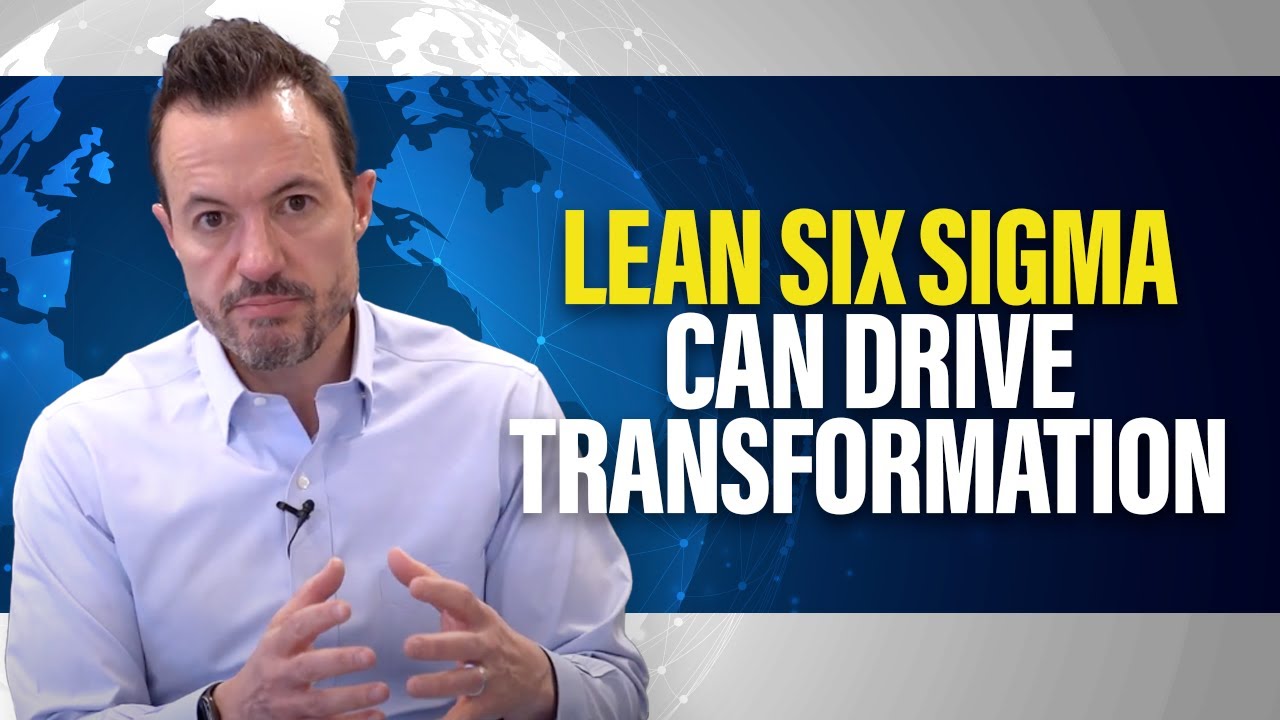

Eric is recognized globally as a leading voice in digital transformation and ERP strategy. Over the past two decades, he has helped hundreds of organizations – including Nucor Steel, Fisher & Paykel Healthcare, Kodak, Coors, Boeing, and Duke Energy – define their technology roadmaps, modernize complex operations, and deliver real business value from large-scale transformation initiatives.
As Founder and CEO of Third Stage Consulting, Eric leads an independent, technology-agnostic advisory firm focused on helping clients navigate the shift from traditional ERP to more flexible, AI-enabled Digital Enterprise Operations (DEO) models. His work spans ERP selection, implementation quality assurance, organizational change, and operating model design across a wide range of industries and geographies.
Eric is also a prolific thought leader, known for his pragmatic takes on AI, cloud, and enterprise software trends, as well as his firm’s benchmark research and frameworks for de-risking transformation. He is dedicated to helping executive teams cut through vendor hype, make confident investment decisions, and successfully reach the “third stage” of their digital evolution.


